This Issue

Reverse Shot 33—The Life of Film

If you’re like us, nothing is more enervating than having to constantly hear about the “Death of Film.” Yes, this has been on the table since at least the 1950s, with the expansion of television, but it never stops being a topic for the unimaginative among our brethren, especially in the face of the transition to digital. It is accomplished. So what now? No amount of stale high-end-publication think pieces can change the fact that in many ways, things have never been more exciting.

Check back daily for new articles.

The Latest

Frances Ha

francesha_t.jpg Since his debut with Kicking and Screaming, he has cultivated a sort of Theater of Cruelty for the New Yorker set, focusing on the hostility, self-pity, impotence, and emotional violence lurking beneath the cultured veneer of his protagonists. The humility and openness of Gerwig’s character in Greenberg was particularly refreshing in the midst of Baumbach’s usual brutes with PhDs, so it’s not surprising that he would decide to build an entire movie around the actress as a follow-up.

The Great Gatsby

gatsby_t.jpg Fitzgerald’s slim, devastating masterwork is, finally, a novel of America masquerading as a half-baked tragic love story, where the movie is an overwrought, though not unforgivable, tragic love story with no interest in or insight into America. This crucial distinction suggests Luhrmann’s failure here—not that he’s missed the point of Fitzgerald’s novel (though he has) or that his movie is a lousy adaptation of the book (though it is), but that Gatsby becomes nothing more than an occasion for the director to revisit familiar Luhrmann territory without expanding his ambitions thematically or aesthetically.

Sightseers

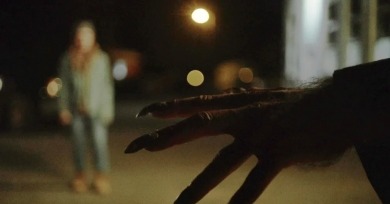
sightseers_t.jpg It’s partly to Wheatley’s discredit that the inevitable “Badlands directed by Mike Leigh” comments impose themselves so readily, and are arguably due to more than just lazy criticism. Wheatley is, stylistically speaking, something of a magpie, appropriating recognizable tropes not because he places himself in a particular school of filmmaking, but because he uses audience identification of genre and style to build tension (Kill List), laughs (Sightseers), or both (Down Terrace), and does so with great skill.

We Always Lie to Strangers

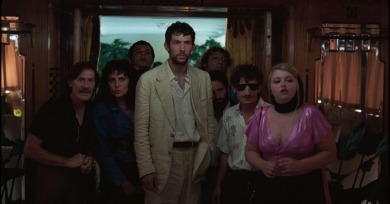
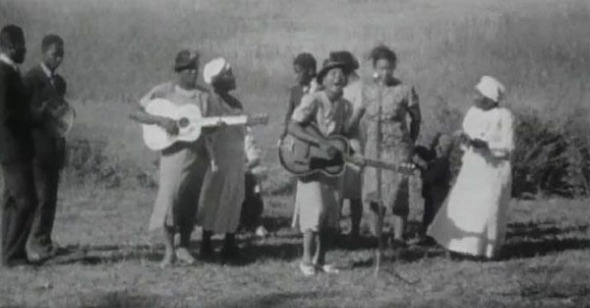
wealwayslie_t.jpg The title We Always Lie to Strangers, which comes from an old Bransonite saying recalled onscreen by Bill Lennon, should clue us into an imminent distancing scheme. It is a riddle. Who are “we”? Who are “strangers”? What’s the lie? Does “we” refer to the people of Branson, to human beings in general, to the filmmakers themselves? Is this film about the gap between life and art, or the illusory nature of documentary filmmaking itself—the arrangement of abstract experience into finite narrative?

Post Tenebras Lux

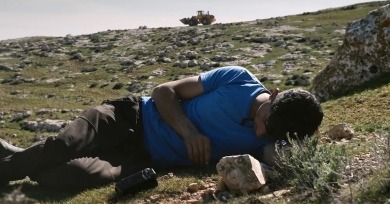
posttenebras_t.jpg The ecstatic cinematic rhapsody that is Post Tenebras Lux is not for everybody—but noting this is not to suggest that it couldn’t be. Though it scans like an impenetrable extended anti-narrative of non sequiturs peppered with visual tics and odd happenings, it’s also somehow the most human and approachable film Mexican filmmaker Carlos Reygadas has yet made.

Memories Look at Me

memories2_t.jpg This patient, sustained portrait of familial love is a rare achievement in today’s art cinema, and the mixture of deep sensitivity and matter-of-factness with which it explores its subject is without precedent in either Jia or Hou’s work. Memories opens with a close-up that anticipates the film’s first-person perspective: a shot of Song in profile as she peers out of a car window, lost in baby-faced contemplation, gray sky and tall bridges gliding past her. But while the film’s adult female point of view remains obvious throughout, our expectation of a confessional tone is what the director seeks to subvert at every turn.

Love Is All You Need

loveisall_t.jpg In Bier’s romantic coliseum, a perfect match is nothing but the product of a long sum of injustices, insults, and mistreatments, carefully chosen to cancel each other out. That all this comes surrounded by candy-colored travel-brochure views of Italy, syrupy strings on the soundtrack, charming smiles, and declarations of love suggests that Love Is All You Need is either a profoundly ironic provocation or a film bafflingly unaware of its own bitterness.

An Interview with Olivier Assayas

assayas_t.jpg I made this film because people have been making fun of the seventies. And I think that’s because the dreams people had at that time are still considered a threat. I would never make fun of kids who rejected the material values of the world, and who considered that life was about some sort of political or spiritual path. They were dealing with abstractions, and I do believe in abstractions. I don’t think there’s anything too romantic in the film, either. I was trying as much as I could to strip that away, because I have already done the romantic version of this film, in Cold Water and Desordre.

Color Runaway Dog and Dress Rehearsal for Utopia

colorrunaway_t.jpg Venezuelan videomaker Andrés Duque's two feature-length works and handful of shorts strive toward a new consideration of the visual, attempting to draw it back into a project of personal image-making. The two features are curiously complementary and often dizzyingly opaque: 2011’s Color Runaway Dog and 2012’s Dress Rehearsal for Utopia are works of vertiginous montage, and each mine the director’s large (and seemingly disorganized) hard-drive archive of everyday images, observational footage, ripped DVDs, and YouTube objets trouvés.

Something in the Air

something_t.jpg The self-referentiality is multifaceted: Gilles and Christine are of course character names from Cold Water, which seems like an inescapable reference point, being about young artists and amour fou, and containing that epic, needle-dropping house party sequence—a primal scene in Assayas’s cinema—which gets mirrored (though not topped) in the new film.

25th Hour

25thhour_t.jpg25th Hour is ultimately a portrait of New York. Monty doesn’t seem like a resident of New York City so much as a borough unto himself, a man who has conflated his identity with that of the metropolis to which he belongs. He’s a child of a city that builds up its relics and over its ruins, so lost in the thrall of its own inertia that it would rather gentrify than reroute, a unique place that feels at once immortal and always on the brink of disaster. It’s like the city never sleeps because it’s afraid it might not wake up the next morning.

Attenberg

attenberg_t.jpgAttenberg largely eludes classification. Tsangari describes the film best in Cinema Scope as “Western + science fiction + screwball comedy + Greek tragedy. It’s also none of these things, of course.” Its plot is sparse, but is most simply described as a coming-of-age story set in modern-day Greece, following the sheltered and emotionally stunted Marina (Ariane Labed), living with her cancer-stricken father, Sypros (Vangelis Mourikis). Like him, their post-boom industrial town is slowly dying.

Woman on the Beach

womanonbeach_t.jpg While South Korean cinema arrived on the international scene with a bit of a bloody splat in the last decade or so, with The Isle (2000), Bad Guy (2001), Sympathy for Mr Vengeance (2002), and Oldboy (2003), and others playing up Jacobean violence, Hong Sang-soo more quietly wonders about the ways we can all be monsters.

The Paradise Trilogy

paradise faith_t.jpg “Paradise” is more a triptych than a trilogy—with all the reference to medieval altarpieces that that implies. Seidl sees the twenty-first century using the compositional values of the fifteenth, as evidenced in his flat, compressed tableaux, in which cell-like interiors are captured at a stationary medium long-shot, figures held flush in their center. Each image is framed much like the last, until the uniformity is interrupted by an outbreak of ragged, heedless handheld and, usually, violent chaos.

At Any Price

atanyprice_t.jpg In today’s agricultural industry, Bahrani and co-writer Hallie Elizabeth Newton would have us believe, such seemingly modest hopes for the future as Henry’s require the wholesale forsaking of any and all scruples—that’s just the climate out there, with large corporations pitting neighbor against neighbor in the interest of their own bottom lines. The movie’s representative Iowans, then, are almost uniformly devoid of any meaningful agency, slaves to a system all too eager to reduce them to whimpering sellouts.

Uncle Boonmee Who Can Recall His Past Lives

Uncle_Boonmee_t.jpg The film’s universe resides in a space somewhere between reality and reverie, with mystical sights and uncanny experiences rubbing elbows with the quotidian events and emotions of the everyday. This synthesis occurs not through rib-nudging glibness or arty posturing, but rather an aesthetic of wonderment, warmth, and observation that has no equivalent in the world filmmaking scene.

The Curious Case of Benjamin Button

benbutton_t.jpg The complexity of Button’s emotional effects stems as much from its cornball premise as from the subtle ways Fincher manipulates it to his own ends. For every predictable move the script makes, the film grows richer and deeper by frustrating our expectations of what a big Hollywood epic is supposed to do in justifying its hero’s significance.

Minima Moralia

minima_t.jpg I still have no idea how to write with a spoiler-free conscience about Robert Lee’s Minima Moralia. It’s not a matter of trying not to give away what happens. Because for the most part, I’m not sure that this feature-length video work from 2005 is about “what happens in it,” not at least in the sense of story or event as movies generally give it to us. It’s something trickier, thornier, a problem more about the movie’s DNA than what it wants to “tell us.”

House of Pleasures

houseofpleasures_1_t.jpg This is a film of brave stylistic flourishes and disorienting sensory experience, even as it plays with classic techniques of montage, inter-title division, and subjective first-person reminiscence. Bonello’s detailed, period mise-en-scène further heightens the allure, allowing for liberal mobility between the theatrical, the novelistic, and the cinematic. It’s perhaps no surprise, then, that Bonello, in an interview with Cinema Scope around the time of the film’s premiere, would cite both Quentin Tarantino and Hou Hsiao-hsien as influences.

To the Wonder

tothewonder_t.jpg The term “Malickian” instantly conjures a specific set of images. It makes the lazy critic’s job much easier: identifying the familiar, as though making up a checklist, is much simpler than reckoning with those aspects that are unfamiliar and strange. And To the Wonder is filled with the sorts of mysteries that not only make Malick’s work indefinably captivating but also instill awe and hope for the future of a medium supposedly in its death throes.